
From Reactive to Proactive: How Cities Catch Traffic Problems Before They Form
How cities move from reacting to jams to catching them 15 to 30 minutes early. What predictive traffic management is, and Pune's measured result.

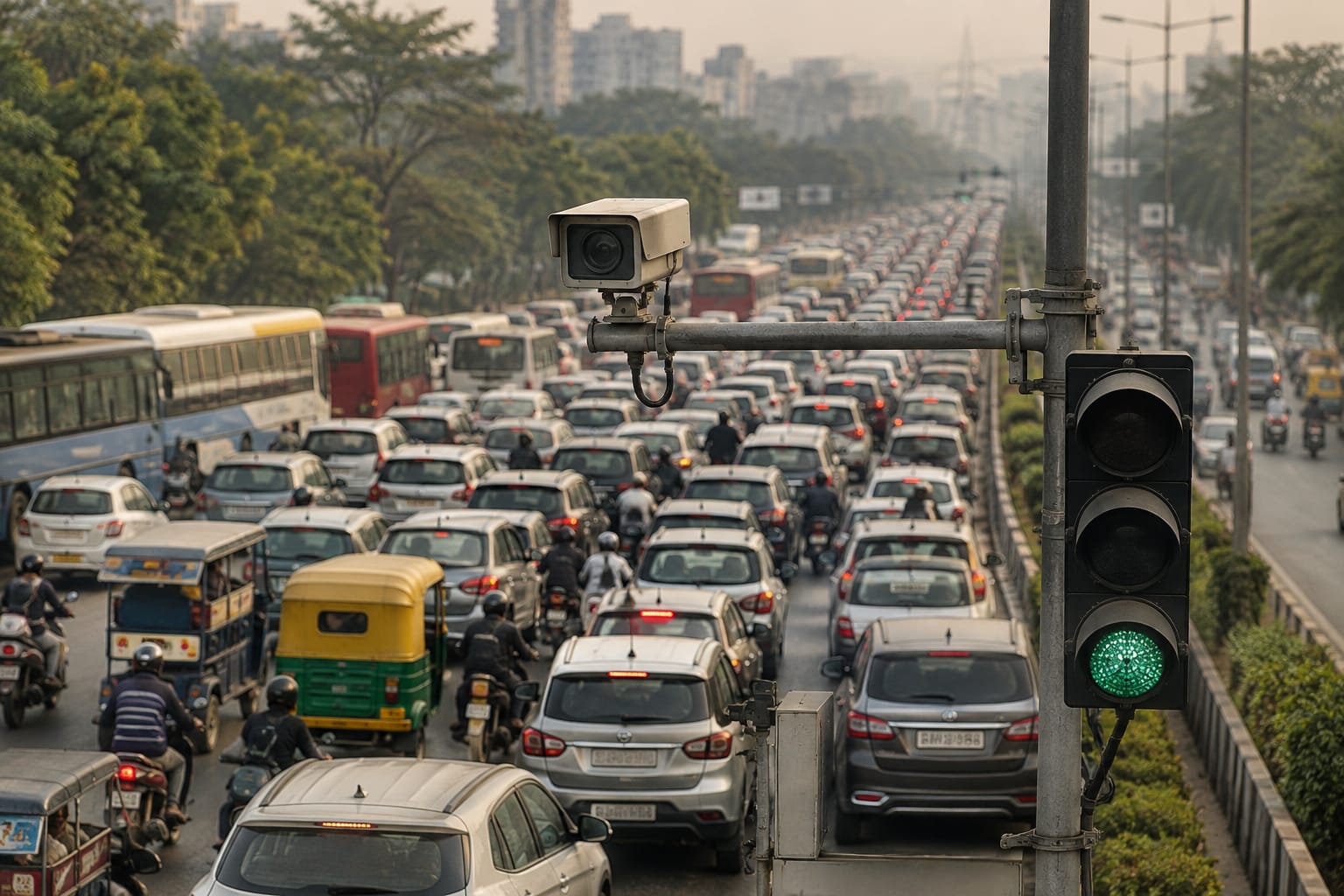
You are sitting at a junction that has not moved in ten minutes. There is no diversion, no officer in sight, no sign that anyone knows it is happening.
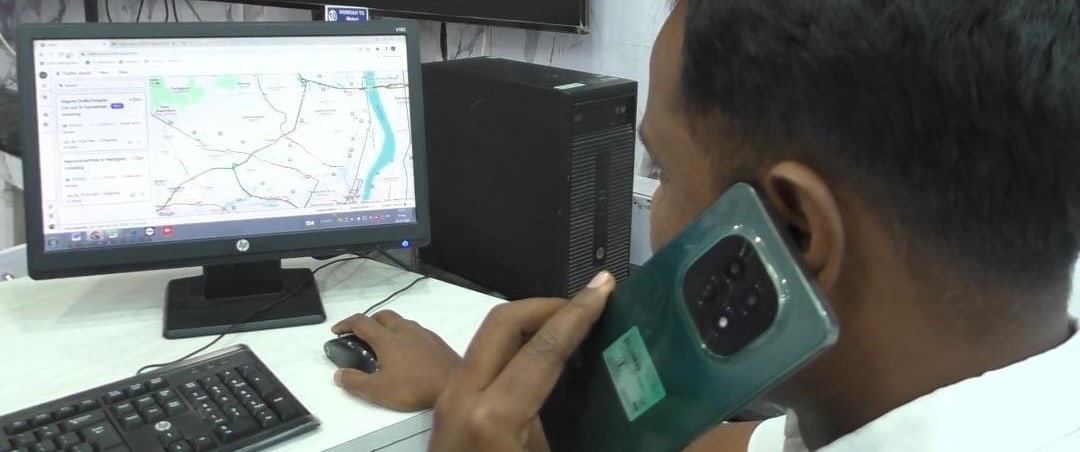
The reason is simpler than you would think. In most cities, the traffic control room finds out about that jam the same way you do, which is by the time it is already there. A junction seizes up around 6 PM, the calls start coming in, an officer gets sent, and by the time anyone acts, the queue has already spilled back into three connected roads. The team spends its evening clearing a mess that formed twenty minutes before they ever heard about it.
That is reactive traffic management. It is how most cities run, and it is not a failure of effort. It is a failure of timing. You cannot get ahead of a problem you only learn about after it happens.
Predictive traffic management changes when the city finds out. Instead of responding to congestion after it forms, the team sees a road starting to slow past its normal pattern and acts while the jam is still forming, or before it forms at all. This article explains what that shift actually looks like, why most cities are stuck in reactive mode, and how one Indian city made the move, with numbers its own police force put on the record.
What reactive and proactive actually mean here
Reactive traffic management waits for evidence you can see: a camera catches a stopped queue, an officer radios it in, a commuter complains.
Proactive, or predictive, traffic management flags the early signal instead, the moment a road's speed drops below what is normal for that road, that hour, that day. That head start is enough time to retime a signal, move a unit, or publish a diversion before the gridlock compounds.
The difference is not effort or intent. It is timing.
Pune City Traffic Police described this shift plainly when they moved from one way of working to the other:
- The old way: worst junctions chosen by complaint volume, asks to the city engineers backed by anecdote, no baseline to confirm a fix ever worked.
- The new way: every road ranked by measured delay, daily; junctions chosen by data, not noise; before-and-after proof on every intervention.
Why most cities cannot work proactively
Being proactive has one hard requirement: you have to be able to see the whole network, all the time. And most cities cannot.
A camera covers the junction it is pointed at. A city has thousands of kilometres of road and a few hundred cameras, so roughly 97% of its roads are invisible to the monitoring network. Those roads stay invisible until a problem on one of them grows big enough for someone to phone in.
That is the trap. A city can invest 50+ crore in an ITMS and still be reactive everywhere the hardware does not reach, which is almost everywhere.
What proactive traffic management looks like in practice
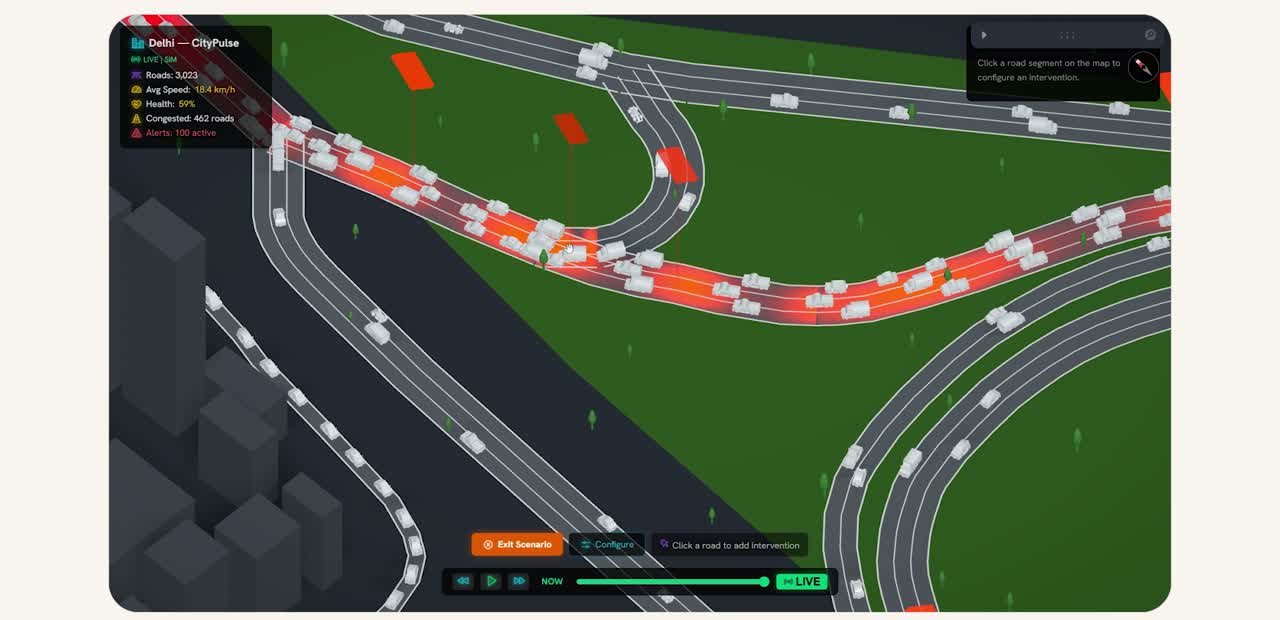
TraffiCure runs on Google's Roads Management Insights (RMI), the aggregated, anonymised speed data from Google Maps. In Pune that meant 964 roads, refreshed every two minutes, live from day one, with no new hardware installed.
That coverage is what makes prediction possible. Three things turn the raw data into early action.
It knows what "normal" is for every road. TraffiCure learns what normal speed looks like at each time of day and each day of the week. So it does not just see that a road is slow; it sees that a road is slower than it should be right now, which is the early warning a reactive system never gets.
It forecasts ahead. The platform flags conditions 15 to 30 minutes out. A jam building at a construction bottleneck gets flagged as "severe in 15 minutes," while there is still time to adjust the signal and send a unit, instead of after the whole road has already choked.
It lets you test a fix before you commit to it. A planned closure or diversion can be pushed to Google Maps and modelled first, so the team sees the real-world spillover before a single barricade goes up. The diversion plan becomes precise instead of a guess.
There is a monsoon version of this that matters for Indian cities. A low-lying underpass that floods on heavy rain is a predictable failure: the platform can fuse a weather forecast with the junction's history and prompt the city to pre-position pumps and publish advisories ahead of the rain, holding a usable alternate route through the storm window instead of losing the corridor entirely.
Pune: the shift, measured by the police
Pune City Traffic Police deployed TraffiCure in January 2026. Within the first six weeks the platform logged 839,000-plus observations and generated 15,034 alerts across 836 roads. The alert pattern showed exactly where the city's pain sat in time: peak activity between 5 and 8 PM, with the 6-to-7 PM hour alone producing 1,669 alerts. That is the kind of precise, timed picture a complaint log can never assemble.
But the number that matters is the one the police reported themselves. Additional Commissioner of Police Manoj Patil, Pune City Traffic Police:
Over the last two months of using the application, we have observed that the average vehicular speed has increased to 26.8 kmph from 20 kmph.
That is a 34% rise in average speed across the city's major corridors, over two months, measured by the force using the system, not estimated by a vendor. Police Commissioner Amitesh Kumar called Pune the first city in India to implement such a project. The result was carried by the Times of India, Hindustan Times, and Times Now.
Working proactively also made the team faster once a problem was flagged: on average 11.2 minutes to clear a fast-developing alert, and 48.6 minutes for a broader congestion alert. Problems were being handled while they were still small.
Prediction only pays off if you can prove it worked
The weakness of most traffic interventions is that nobody checks whether they helped. A signal gets retimed, and the city moves on with no idea if it made a difference.
Because TraffiCure holds a baseline for every road, the same data that flags a problem also measures the fix. After an intervention, the team gets a before-and-after on the exact metrics leadership cares about, average speed, peak travel time, reliability, queue length. That closes a loop public spending almost never closes, and it compounds: each proven fix makes the next decision easier to justify.
What this means for your city
If your control room still hears about jams from complaint calls, the constraint is not your team. It is that nobody can act early on roads they cannot see.
Pune made the shift in weeks, on software alone, and its own police force put the result on the record.
Frequently asked questions
What is predictive traffic management?
Watching the whole road network continuously and flagging a problem while it is still forming, rather than responding after a jam has set in. In practice it means knowing what normal speed looks like on each road at each hour, and getting an alert the moment a road deviates from it.
What is the difference between reactive and proactive traffic management?
Reactive waits for visible evidence, a camera catches a queue, an officer radios it in, a commuter complains. Proactive flags the early signal before the queue forms. The difference is not effort, it is timing.
How far ahead can traffic congestion be predicted?
TraffiCure flags conditions 15 to 30 minutes out. That is enough time to adjust a signal, move a unit, or publish a diversion before a corridor chokes.
Can predictive traffic management work without cameras?
Yes. Prediction needs network-wide coverage, which cameras cannot provide at city scale, since roughly 97% of a city's roads have no camera on them. Probe data from Google Maps covers every road with traffic on it, which is what makes prediction possible across a whole city.
TraffiCure delivers real-time traffic intelligence for every road in your city, on existing data, with no civil work. See all features or book a demo to see your city's data.
See it on your own city's roads.
Book a demo to see your city's data.